Local voices echo national concerns: What the CQC's State of Care report tells us
The report, published on 23 October, highlights persistent concerns around access to care, growing demand, mental health services, workforce pressures, and deep-rooted health inequalities.
The CQC's report provides an important national overview of the challenges facing health and social care. But these challenges are lived realities for our residents and communities in Croydon.
Healthwatch Croydon are hearing directly from carers who are exhausted and overwhelmed, diminishing their ability to advocate for themselves and the person that they care for, often not fully informed of their rights and ways to access support.
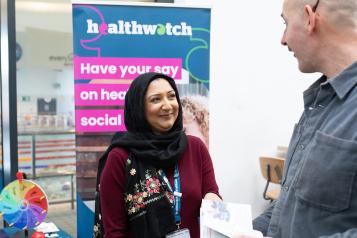
Through delivering local services and community engagement projects, Healthwatch Croydon hears directly from thousands of residents every year. Local people consistently tell us about the challenges they face navigating health and care services, the barriers experienced by marginalised communities, and the impact of long waits for support.
The CQC report highlighted a number of themes that are particularly familiar to Healthwatch Croydon’s work, and the views shared by residents. Here are two examples of areas mentioned by CQC, where Healthwatch Croydon has made a difference locally.
1: Rising demand for neurodiversity and mental health support
The CQC raises significant concerns about children and young people's services, particularly increasing waits for neurodevelopmental assessments and mental health support. The number of children and young people waiting over a year has increased by 129% in 2024-26, with many of these relating to the diagnosis of neurodevelopmental conditions, such as autism and ADHD.
Healthwatch Croydon's 2025 research, Neurodiversity and Healthcare Access: Croydon Patient Perspectives, found strikingly similar issues with Croydon adults. Participants reported long waits for diagnosis, unclear referral pathways, difficulties obtaining support after diagnosis, and frequent overlap between neurodiversity and mental health conditions. Many described sensory, communication and organisational challenges that made healthcare difficult to navigate.
Healthwatch Croydon helped identify the need for improved communication throughout diagnostic pathways, more comprehensive post-diagnostic support, and ensuring healthcare systems are designed with different communication and sensory needs in mind.
2: Health inequalities continue to shape people's experiences
The CQC links where people live to access, waits, care quality and outcomes, often poorer in deprived areas.
Our CQC-funded Croydon vulnerable migrants’ experiences of health and care services report echoes this. We surveyed and interviewed Croydon migrants from 24 countries including Iran, Afghanistan, Sri Lanka, Cameroon, Honduras and Trinidad and Tobago, who were living in migrant accommodation while awaiting immigration decisions.
We heard that they mainly used GP services, especially Rainbow Health Centre, a dedicated GP service for homeless and asylum seekers, alongside A&E, outpatient, mental health and dental care. Most registered easily with a GP, usually through Rainbow Health Centre, and valued their care but few knew of the Safe Surgeries initiative.
Most of the people we engaged with reported hospital and specialist waits and limited dental access, with some facing poorly understood mental health needs, medication difficulties and long emergency waits. Few knew of the CQC and some confused it with accommodation or healthcare support providers.
Healthwatch Croydon recommendations made to the CQC, included faster access, clearer guidance beyond GP care and better mental health support.
Listening to local voices
Listening to people's experiences helps identify the specific barriers faced and generate practical ideas for improving services and systems. By understanding health systems and working with decision-makers, Healthwatch Croydon translated this into more accessible and effective health and care services in its local patch.
The voices of local communities remain one of the most valuable tools for shaping better health and care services for all, often the voices in greatest need are not at the table they need our support to be represented and heard.
You can read the CQC-State of Care Report by clicking on the ‘Find out more’ pink button below: